Watering tips
Plants and trees need MUCH LESS WATER than grass. Not sure what the difference is between sprinklers and drip irrigation? You aren't alone.
When it comes to landscapes, watering isn't "one size fits all." How long and often you water your landscape depends largely on the type of plants, shrubs and irrigation components you have. It also varies by time of year.
Whether you have sprinklers or drip irrigation — or both — it's important to know the difference between them, how they work, and when to use them.
💧 Drip watering
Drip irrigation is truly beneficial to plants in desert environments. Drip irrigation systems deliver water more slowly and efficiently, and they should run longer but less frequently than sprinkler systems.
The length of each watering should be determined by the emitter flow rate, soil type, and weather conditions.
It's easy to accidentally over-water your plants on drip systems! Use the information on this page to determine the correct run times for your landscape. Looking for tips on designing and maintaining your drip system? Visit SNWA.com for more information and to sign up for a free drip irrigation class.
How often to water
Seasonal watering restrictions apply to customers with drip irrigation systems. While drip irrigation may occur any day of the week, the number of days is limited by season.
Plants need far less water than grass. Here's how we recommend you run drip irrigation systems during each season:
- Spring and Fall: Two days a week
- Summer: Four days a week
- Winter: One day a week or less
Remember to avoid Sunday watering and comply with seasonal watering restrictions—or face a water waste fee.
How long to water
Determine the amount of time to water based on the rate of flow of your drip emitters.
| Emitter type | Length of each watering |
|---|---|
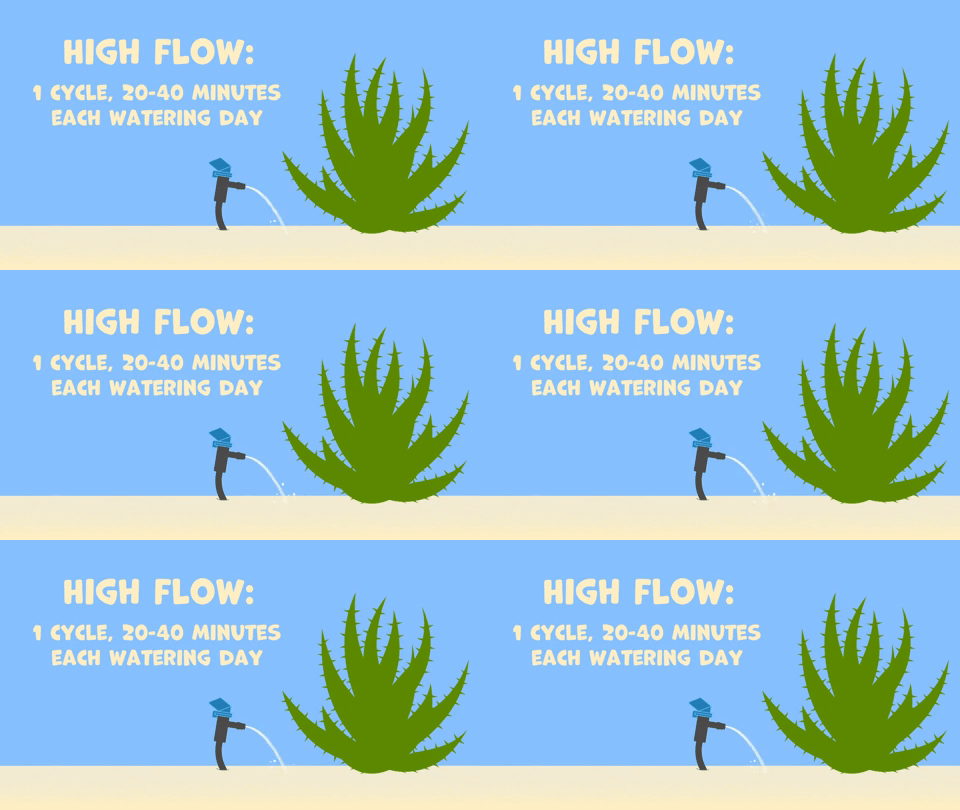
| High-flow emitter (Up to 20 gph) | 20 - 40 minutes or less |
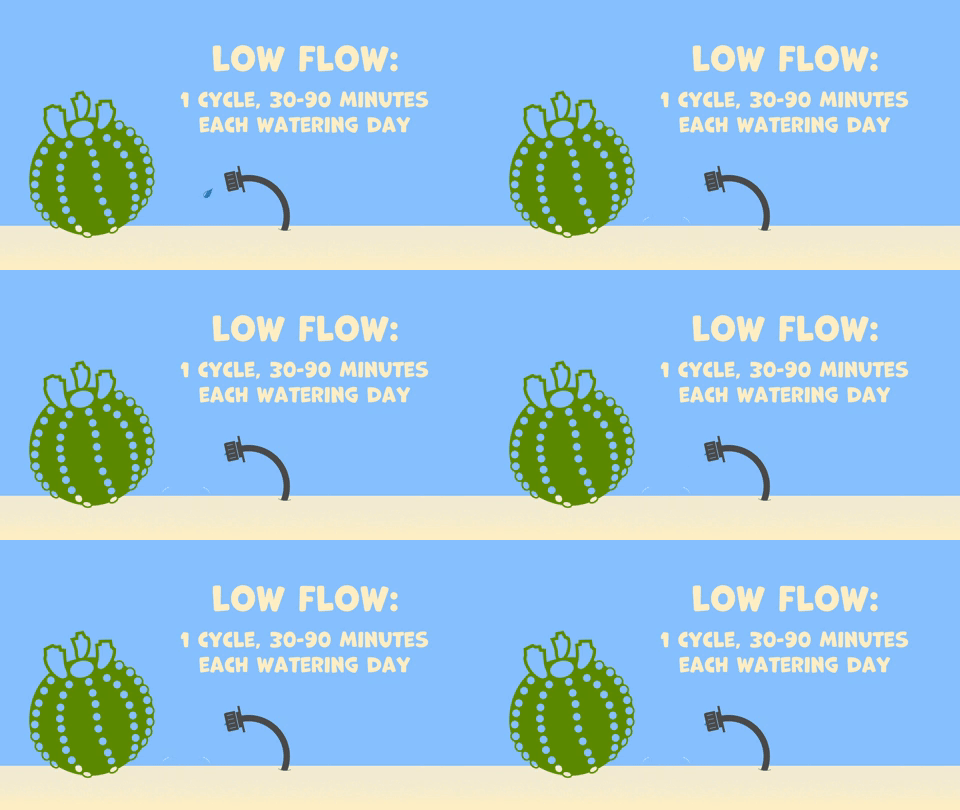
| Low-flow emitter (Up to 4 gph) | 30 minutes or less |
| Low-flow emitter (Up to 2 gph) | 60 minutes or less |
| Low-flow emitter (Up to 1 gph) | 90 minutes or less |
High-flow or low-flow? Don't know?
- Low-flow: Beads on tip or drips slowly
- High-flow: Streams like a water fountain
- gph: Gallons per hour, often marked on the emitter head. There are many emitter types.
💦 Sprinkler watering
Sprinklers are a perfect match for your grass. That's because they water short and sweet! They work in gallons per minute, and they don't mess around.
How to water grass
For lawns watered by sprinklers, water no more than 12 minutes total. On your assigned watering days, water in three 4-minute cycles, with about an hour between each cycle if using pop-up sprinklers. Water for about 12 minutes each watering cycle if using rotating sprinkler heads.
When to water
Fall: As early fall days are still quite warm, continue watering overnight or around dawn. For example, four minutes apiece at 5, 6, and 7 a.m.
Winter: Water during the warmer part of the day to prevent freeze and avoid afternoon winds. For example, 8, 9 and 10 a.m.
Spring: Water at 5, 6, and 7 a.m., for four minutes each time. Turn off your sprinklers on those rainy spring days!
Summer: Water overnight or around dawn to minimize the amount of water lost to evaporation. For example. 5, 6, and 7 a.m. And remember to add watering days gradually as temperatures get hotter. Start with three to four days in May, then increase watering days only as needed in June, July and August. Never water on Sunday!
Regardless of the season, never water on Sundays!
Sprinkler types
The amount of water needed to maintain your lawn depends on the sprinkler system you have.
Pop-up (most common)
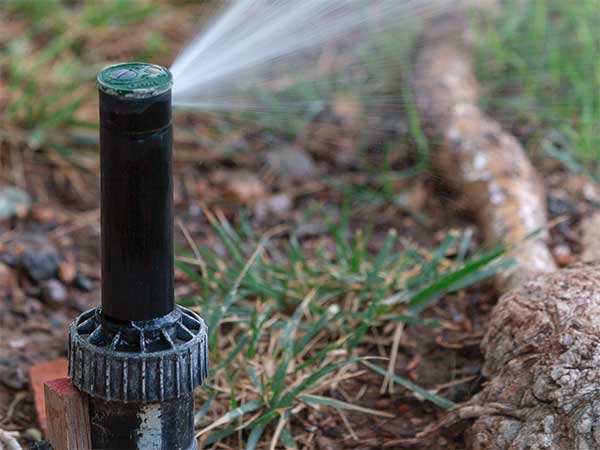
- 3- to 4-inch pop-ups
- Sprays water over large areas
- Run 3 cycles, 4 minutes each
Stream rotor (less common)
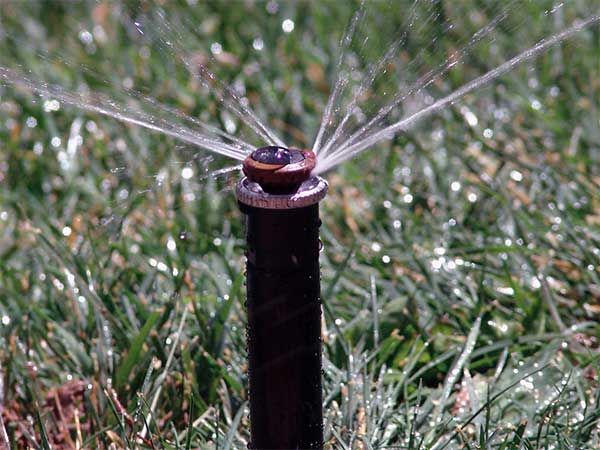
- Applies water more slowly.
- Sprays water over smaller areas
- Run 3 cycles, 8 minutes each
Seasonal tips
Fall weather tips
Brown spots
- Hand water brown spots until they are gone.
- Eliminate blocked spray patterns by trimming around the sprinkler head or installing a taller 3- or 4-inch pop-up.
- Make sure you are using the same type of sprinkler heads throughout your lawn, do not mix and match.
- Check that your sprinkler heads are level to grade, perpendicular to the slope of the lawn and not watering sidewalks, walls, or patios.
- Ensure sprinkler heads provide "head-to-head" coverage. The spray of one sprinkler should reach the head of the adjacent sprinkler.
- Determine whether water pressure is a factor. Misting and excessive drift are signs of high pressure. Low pressure displays itself with weak, short spray patterns and reduced coverage.
Burned and scorched leaves
- Water plants deeply and infrequently to allow oxygen in the soil, wash away salts, and encourage deep rooting.
- Deeply water trees and shrubs once every seven to 10 days. Newer plants may need water twice as often.
- Add a layer of surface mulch 2- to 4-inches thick to conserve water and provide insulation from the heat.
- Ensure you are using the right fertilizer both for your specific plants and for the time of year. Some fertilizers release much faster in hot weather, increasing the potential for damage.
Compacted soils
- Aerate at least twice a year to minimize compacted soils, which can stress your lawn.
- If you notice an area that is particularly dry, add a tablespoon of liquid soap to a gallon of water and drench the dried area. This breaks down the surface tension of the grass.
Grass
- Each time you mow the lawn, change directions and set your mower to the proper height (2 ½ - 3 inches for tall fescue and ¾ - 1 ½ inches for Bermuda) to promote a healthy lawn and to reduce water use.
- Aerate grass in September or October to resolve compacted soil and boost water penetration, reduce runoff on slopes, and help water and fertilizer nutrients get down to the roots.
When to water
- Water overnight or around dawn to minimize the amount of water lost to evaporation. For example. 5, 6, and 7 a.m.
Plant selection
Choose native plants that are meant for the arid Southern Nevada climate and require less water and maintenance. There are a variety of low-maintenance plants which will add both color and vibrance to your landscape. Bermuda and other warm-season grasses require about one-third less water than tall fescue grass.