Watering tips
Plants and trees need MUCH LESS WATER than grass. Not sure what the difference is between sprinklers and drip irrigation? You aren't alone.
When it comes to landscapes, watering isn't "one size fits all." How long and often you water your landscape depends largely on the type of plants, shrubs and irrigation components you have. It also varies by time of year.
Whether you have sprinklers or drip irrigation — or both — it's important to know the difference between them, how they work, and when to use them.
💧 Drip watering
Drip irrigation is truly beneficial to plants in desert environments. Drip irrigation systems deliver water more slowly and efficiently, and they should run longer but less frequently than sprinkler systems.
The length of each watering should be determined by the emitter flow rate, soil type, and weather conditions.
It's easy to accidentally over-water your plants on drip systems! Use the information on this page to determine the correct run times for your landscape. Looking for tips on designing and maintaining your drip system? Visit SNWA.com for more information and to sign up for a free drip irrigation class.
How often to water
Seasonal watering restrictions apply to customers with drip irrigation systems. While drip irrigation may occur any day of the week, the number of days is limited by season.
Plants need far less water than grass. Here's how we recommend you run drip irrigation systems during each season:
- Winter: One day a week or less
- Spring and Fall: Two days a week
- Summer: Four days a week
Remember to avoid Sunday watering and comply with seasonal watering restrictions—or face a water waste fee.
How long to water
Determine the amount of time to water based on the rate of flow of your drip emitters.
| Emitter type | Length of each watering |
|---|---|
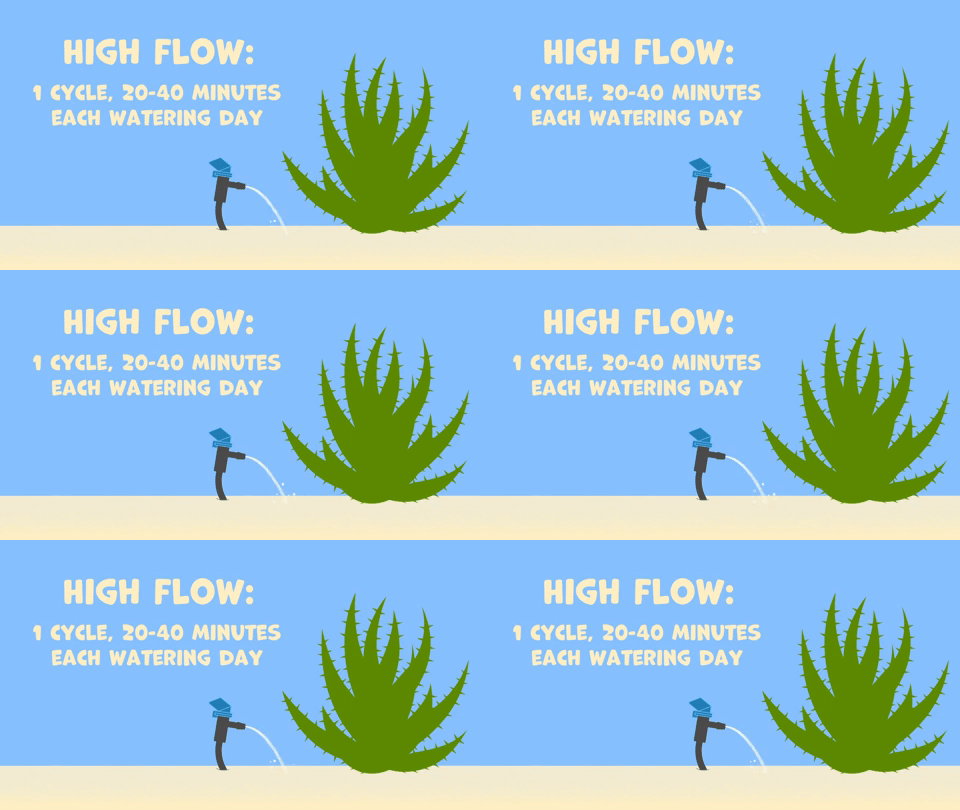
| High-flow emitter (Up to 20 gph) | 20 - 40 minutes or less |
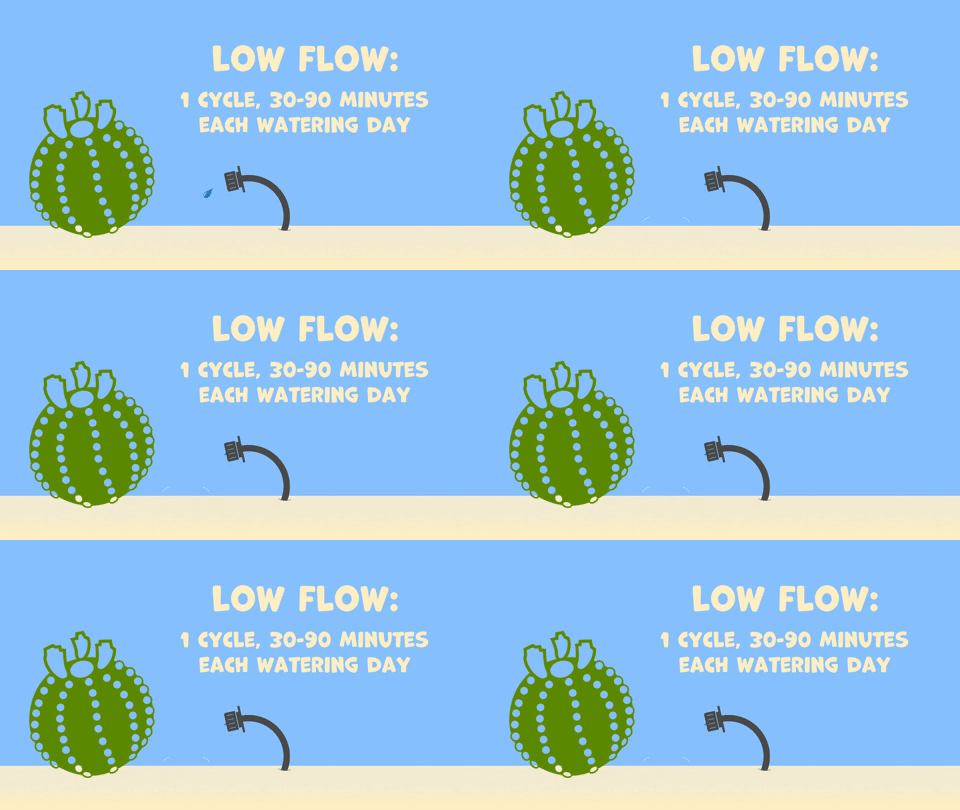
| Low-flow emitter (Up to 4 gph) | 30 minutes or less |
| Low-flow emitter (Up to 2 gph) | 60 minutes or less |
| Low-flow emitter (Up to 1 gph) | 90 minutes or less |
High-flow or low-flow? Don't know?
- Low-flow: Beads on tip or drips slowly
- High-flow: Streams like a water fountain
- gph: Gallons per hour, often marked on the emitter head. There are many emitter types.
💦 Sprinkler watering
Sprinklers are a perfect match for your grass. That's because they water short and sweet! They work in gallons per minute, and they don't mess around.
How to water grass
For lawns watered by sprinklers, water no more than 12 minutes total. On your assigned watering days, water in three 4-minute cycles, with about an hour between each cycle if using pop-up sprinklers. Water for about 12 minutes each watering cycle if using rotating sprinkler heads.
When to water
Winter: Water during the warmer part of the day to prevent freeze and avoid afternoon winds. For example, 8, 9 and 10 a.m.
Spring: Water at 5, 6, and 7 a.m., for four minutes each time. Turn off your sprinklers on those rainy spring days!
Summer: Water overnight or around dawn to minimize the amount of water lost to evaporation. For example. 5, 6, and 7 a.m. And remember to add watering days gradually as temperatures get hotter. Start with three to four days in May, then increase watering days only as needed in June, July and August. Never water on Sunday!
Fall: As early fall days are still quite warm, continue watering overnight or around dawn. For example, four minutes apiece at 5, 6, and 7 a.m.
Regardless of the season, never water on Sundays!
Sprinkler types
The amount of water needed to maintain your lawn depends on the sprinkler system you have.
Pop-up (most common)
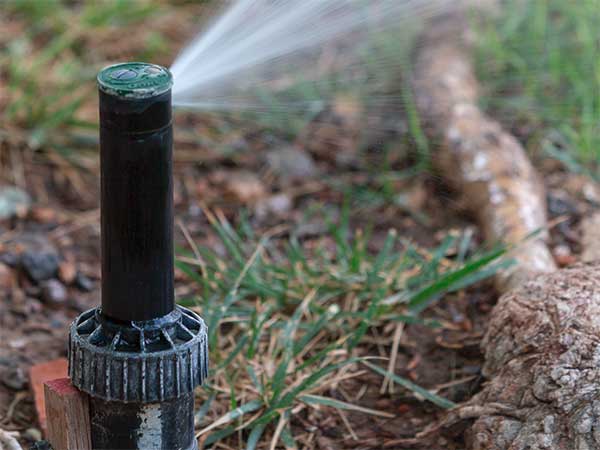
- 3- to 4-inch pop-ups
- Sprays water over large areas
- Run 3 cycles, 4 minutes each
Stream rotor (less common)
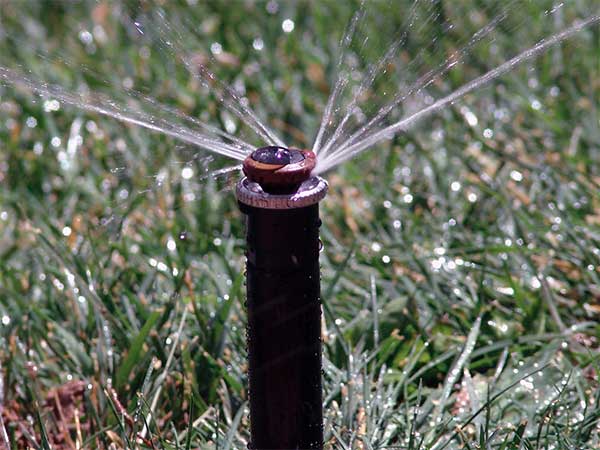
- Applies water more slowly.
- Sprays water over smaller areas
- Run 3 cycles, 8 minutes each
Seasonal tips
Cold weather tips
Fertilizer
- Fertilize in late September or early October with a balanced mix of nitrogen, phosphorous and potassium. Fertilizer improves turf quality, root growth, and builds cold resistance into your grass.
- To get your landscape through winter, fertilize again in November.
- If you have fruit trees, fertilize them in late winter for the best results.
Freeze and frost
If you notice a plant has been damaged by frost or freeze, leave it alone until warmer weather arrives and new growth appears. Pruning or transplanting a damaged plant during winter months can hurt or even kill it. To protect plants from freezing temperatures:
- Avoid getting water on leaves and petals when watering and add a layer of protective mulch.
- Cover plants with porous materials (old sheets, towels, burlap) at night.
- Use a nitrate fertilizer.
Grass
- To stimulate new crown growth, lower your lawnmower's height to 1½ inches.
- Aerate grass in September or October to resolve compacted soil and boost water penetration, reduce runoff on slopes, and help water and fertilizer nutrients get down to the roots.
- Winter months are plagued with afternoon winds that keep your sprinklers from hitting their grassy targets. Water your yard in the midmorning to avoid them and reduce the risk of icing.
Pipes and hoses
- Disconnect and drain garden hoses when they are not being used.
- Insulate your irrigation backflow device by draping a towel over it and covering it with a bucket or other protective cover that touches the ground. Never obstruct or seal the ports of a backflow protection device.
- Wrap exposed irrigation pipes with pipe insulation, insulated "faucet socks," an old towel or duct tape.
- Don't leave interior or exterior pipes dripping. Las Vegas Valley temperatures generally aren’t extreme enough to warrant it.
- Locate your water shut-off valve and learn how to turn off water at its source, so you can ward off damage from leaks or burst lines. Know how to turn off your irrigation backflow device as well.
Plant selection
February is usually mild enough to allow you to plant petunias, pansies, snapdragons and other cool-season annuals in well-drained, highly-enriched soil. Stake new plants and water them deeply to prevent damage from winds.
Pools
Reduce the risk of damage to your pool during winter months with these tips:
- During freezing temperatures, run filtration and jet pumps continuously.
- Always maintain a proper pool water level.
- Adjust pool and spa jets upwards to reduce surface freezing.
- Repair all air and water leaks.
- Store pool accessories in a clean, dry area.
- Consult with your pool maintenance company about winterizing your pool.
Pruning
The ideal time to prune trees and shrubs is in late winter, when plants are mostly dormant. Finish heavy pruning by mid-February, before buds show evidence of swelling. Don't prune more than one-quarter of the living tissue during the year.